Source Lightweight Durable Bicycle Chain Options for MTB, Road, and Kids Bikes
Find and compare 30 listings for lightweight durable bicycle chain components suitable for mountain, road, and ordinary bicycles. Evaluate specifications such as direct mount compatibility, positive/negative tooth types, and material options including steel and stainless steel to identify the right parts for your assembly needs.
Key considerations
Products List




Comprehensive Sourcing Guide
Lightweight Durable Bicycle Chain Sourcing Guide
Sourcing high-performance bicycle chains requires a disciplined approach that balances weight reduction with mechanical longevity. Buyers must navigate a market where "lightweight" often implies thinner plates or specialized coatings, while "durable" demands robust material integrity and precise manufacturing tolerances. This guide synthesizes observed market signals and technical realities to help procurement professionals make informed decisions when selecting chain suppliers for mountain bikes, road bikes, and other cycling applications.
The following sections provide a structured framework for evaluating suppliers, verifying technical specifications, and ensuring commercial compliance. By focusing on verifiable data points such as material composition, speed compatibility, and certification status, buyers can mitigate the risk of sourcing substandard components that fail under high-load conditions. This approach ensures that the final product meets the rigorous demands of modern cycling performance standards.
Product Scope and Observed Listing Signals
The current market for bicycle chains exhibits a wide range of product configurations, with observed prices spanning from $0.20 to $999 USD. This broad spectrum reflects variations in material quality, manufacturing complexity, and brand positioning. Buyers should recognize that lower price points often correlate with standard carbon steel constructions, while higher tiers may involve stainless steel or specialized lightweight alloys. Understanding this price variance is crucial for setting realistic budget expectations and identifying suppliers who align with specific project requirements.
Observed minimum order quantities (MOQs) range from 1 to 3,000 sets, indicating flexibility for both small-scale prototyping and large-volume production runs. Some suppliers offer samples, which is a critical signal for quality verification before committing to bulk orders. Additionally, customization options such as OEM logos and custom tooth thickness are available, allowing brands to differentiate their products. However, buyers must verify whether these customizations impact lead times or minimum order thresholds, as bespoke features often require longer production cycles.
Technical Specifications to Verify
Material composition is the primary determinant of a chain's weight and durability. Supplied data indicates the use of both carbon steel and stainless steel, with some listings specifying surface treatments like electroplating (ED) to enhance corrosion resistance. Buyers must confirm the exact grade of steel used, as higher carbon content increases hardness but may reduce ductility. For lightweight applications, stainless steel offers superior corrosion resistance and a lower weight-to-strength ratio, though it typically comes at a premium. Verifying the material certificate is essential to ensure the chain meets the specified durability claims.
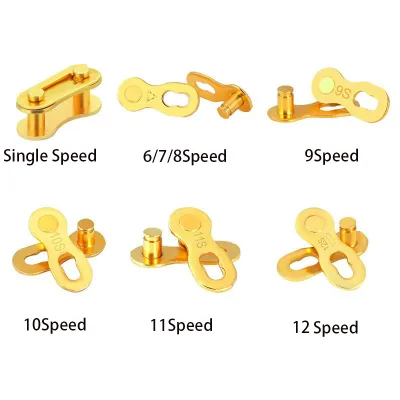
Speed compatibility and link configuration are critical for ensuring proper drivetrain integration. Chains are available for 9, 10, 11, and 12-speed systems, with specific link counts such as 114 links observed in certain listings. The size specifications, such as 1/2 x 1/8 or 1/2 x 3/32, must match the sprocket width and pitch of the target bicycle. Buyers should verify that the chain’s internal and external plate dimensions are compatible with their existing cranksets and derailleurs. Mismatched specifications can lead to poor shifting performance, increased wear, and potential mechanical failure.
Compliance and Safety Documentation
Certification status serves as a key indicator of a supplier’s commitment to quality management and ethical manufacturing. Observed certifications include ISO, BSCI, and CE, which suggest adherence to international standards for product safety and social responsibility. ISO certifications typically relate to quality management systems, ensuring consistent manufacturing processes. BSCI compliance indicates adherence to ethical labor practices, which is increasingly important for brands with sustainability commitments. Buyers should request valid certification documents and verify their authenticity through the respective issuing bodies.
Product standards and packaging requirements also play a role in ensuring safe delivery and storage. Listings indicate the use of safety cartons and specific packing configurations, such as 25 sets per carton, to protect components during transit. While specific international standards for bicycle chains were not explicitly detailed in the observed data, buyers should inquire about compliance with relevant industry norms, such as ISO 2608 for roller chains. Ensuring that packaging meets these standards helps prevent damage and maintains product integrity upon arrival at the destination.
Cost Drivers and Commercial Terms
Several factors influence the final cost of bicycle chains, including material costs, manufacturing complexity, and customization requirements. The use of stainless steel or specialized coatings increases material expenses, while custom tooth profiles or OEM branding adds to production costs. Buyers should analyze the cost breakdown to understand how much of the price is attributed to raw materials versus value-added services. Transparent pricing structures help in comparing suppliers accurately and avoiding hidden costs that may arise from unexpected fees or changes in scope.
Commercial terms such as FOB, CIF, CNF, and EXW define the responsibilities and risks associated with shipping. Lead times observed in the market range from 10 to 25 days after deposit receipt, which is a critical factor for inventory planning. Buyers must clarify whether these lead times include production, quality control, and logistics. Additionally, payment terms and currency considerations should be negotiated to minimize financial risk. Understanding the total landed cost, including shipping and duties, is essential for accurate profit margin calculations.
Supplier Qualification and Quality Control
Supplier qualification involves assessing manufacturing capabilities, quality control processes, and past performance. Buyers should verify the supplier’s production capacity and equipment, particularly for CNC machining if custom components are involved. Observations indicate that some suppliers offer direct mount positive and negative MTB chainrings, suggesting specialized manufacturing expertise. Evaluating the supplier’s ability to maintain consistent tolerances and surface finishes is crucial for ensuring long-term durability and performance.
Quality control measures should include incoming material inspections, in-process checks, and final product testing. Buyers should request sample units to evaluate shifting performance, noise levels, and wear resistance under real-world conditions. Establishing clear acceptance criteria and inspection protocols helps ensure that delivered products meet specified standards. Regular audits and performance reviews can further reinforce quality assurance, fostering a reliable supply chain partnership.
Long-Term Procurement Checks
Long-term success in sourcing bicycle chains depends on continuous monitoring of supplier performance and market trends. Buyers should track key performance indicators such as on-time delivery rates, defect rates, and responsiveness to issues. Maintaining open communication channels with suppliers facilitates quick resolution of problems and fosters collaborative improvement. Regularly reviewing supplier certifications and compliance status ensures ongoing adherence to ethical and quality standards.
Market dynamics and technological advancements may introduce new materials or manufacturing techniques that offer improved performance. Buyers should stay informed about industry developments and evaluate whether new options align with their product strategy. Periodic re-evaluation of supplier contracts and pricing structures helps maintain competitive advantage. By adopting a proactive approach to procurement, buyers can secure a reliable supply of high-quality bicycle chains that meet evolving customer demands.
FAQs
What certifications are available for these chain wheels?
The products hold ISOEEC, BSCI, CE, and ISOCE certifications. These credentials verify compliance with international quality and social responsibility standards. Buyers can rely on these documented certifications for import clearance and supplier vetting processes without needing additional third-party verification.
Can I customize the logo and tooth thickness?
Yes, OEM logo and custom tooth and thickness services are available. The customization options allow for specific branding and performance adjustments. This service supports unique design requirements while maintaining the structural integrity of the chain wheel for various bicycle applications.
What is the typical delivery time for orders?
Delivery takes 10-25 days after the deposit is received. This timeframe applies to standard production runs. Buyers should account for this lead time when planning inventory replenishment or coordinating with downstream distribution channels to ensure timely product availability.
Which bicycle types are compatible with these parts?
These chain wheels fit ordinary bicycles, mountain bikes, road bikes, and kids bikes. The design supports direct mount installation without extra adapters. This versatility ensures broad compatibility across different bicycle categories and riding styles for diverse end-user needs.
What materials are used in manufacturing these components?
Manufacturing utilizes steel, stainless steel, and carbon steel materials. These material choices provide varying levels of durability and weight characteristics. Buyers can select the appropriate material based on specific performance requirements and budget constraints for their bicycle components.
What is the minimum order quantity for these items?
The minimum order quantity ranges from 1 to 3000 sets depending on the specific product model. Some items have an MOQ of 300 sets. This flexibility allows buyers to place orders that match their initial testing needs or large-scale production requirements.